
Available treatments
- TER-01 Treatment of synovitis in chronic inflammatory arthropathies
- TER-02 Intracavitary radioisotope treatment
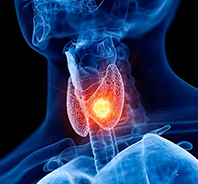
- TER-03 Radioisotope treatment of hyperthyroidism
- TER-04 Radioisotope treatment of low-risk differentiated thyroid cancer (thyroid remnant ablation)
- TER-05 Radioisotope treatment of metastatic bone pain with strontium (Metastron®), samarium (Quadramet®) and radium (Xofigo®)
- TER-06 Peptide receptor radionuclide therapy (PRRT) with ¹⁷⁷Lu-DOTATATE for neuroendocrine tumours
- TER-07 Theranostic radionuclide therapy with ¹⁷⁷Lu-PSMA for prostate cancer
- TER-08 Specialist consultation
- TER-09 Urgent specialist consultation
Treatment of synovitis in chronic inflammatory arthropathies / Intracavitary radioisotope treatment
Description: Treatment of synovitis in chronic inflammatory arthropathies.
Preparation
- The treatment is carried out by prior agreement with the referring physician (rheumatologist, orthopaedic surgeon, specialist in systemic diseases, etc.) and once they have established that there is no local feature that contraindicates it (using X-rays, MRI or CT if necessary).
Indications
- Treatment of synovitis in chronic inflammatory arthropathies.
- Treatment of rheumatoid arthritis and other arthropathies resistant to medical treatment, such as: seronegative arthropathies, haemophilic arthropathy, villonodular synovitis.
- Possible treatment of chronic degenerative arthropathy.
Procedure duration
30 minutes.
Radioisotope treatment of hyperthyroidism
Description: Treatment of hyperthyroidism with ¹³¹I.
Preparation
- If the patient's clinical condition allows, antithyroid treatment must be gradually withdrawn until it is stopped 7 days before radioactive iodine treatment.
- In severe hyperthyroidism or in cases with cardiac involvement, it is not necessary to withdraw antithyroid drugs.
- β-blockers are continued (as needed).
- Thyroid blood tests (total T4 and T3, free T4, TSH and antithyroid antibodies) and confirmation of a normal blood count are required before the radioactive iodine dose is administered.
- Women of childbearing age must also take a pregnancy test, which must be negative.
- Therapeutic efficacy must be checked by means of a whole-body scan and SPECT/CT on the fifth day.
- Patients who have not reached a euthyroid state without antithyroid treatment after 3 months will be assessed to receive a new dose of I-131 following the same protocol.
- In the event of recurrence, the same protocol is followed.
Indications
- Treatment of Graves' disease (diffuse goitre).
- Treatment of multinodular goitre.
- Treatment of toxic adenoma.
Procedure duration
1 hour.
Radioisotope treatment of low-risk differentiated thyroid cancer (thyroid remnant ablation)
Description: Treatment of low-risk differentiated thyroid cancer with ¹³¹I.
Preparation
- Thyroid hormone treatment must be gradually withdrawn until it is stopped 4 weeks before radioactive iodine treatment, or stimulation with rhTSH must be performed.
- Thyroid blood tests (with basal and stimulated thyroglobulin) and confirmation of a normal blood count are required before the radioactive iodine dose is administered.
- Women of childbearing age must also take a pregnancy test, which must be negative.
- Therapeutic efficacy must be checked by means of a whole-body scan and SPECT/CT on the fifth day.
- Patients in whom ablation is not achieved may repeat the treatment after six months following the same protocol.
- In the event of recurrence, the same protocol is followed.
Indications
- Treatment of low-risk differentiated thyroid cancer.
Procedure duration
1 hour.
Radioisotope treatment of metastatic bone pain with strontium (Metastron®), samarium (Quadramet®) and radium (Xofigo®)
Description: Treatment of pain caused by bone metastases from prostate or breast carcinoma that is resistant to hormone therapy, chemotherapy or analgesics.
Preparation
- No prior preparation is needed.
Indications
- Treatment of bone pain caused by bone metastases from prostate or breast carcinomas resistant to chemotherapy and hormone therapy or to analgesics.
- To receive the treatment, the patient must (1) have pain caused by bone metastases, with the site of the pain matching images consistent with metastases on bone scintigraphy. The Karnofsky Performance Status must be 60 or higher. Patients with lower scores could receive the treatment, although in these cases the response is less favourable; (2) have pain despite regular treatment with opioid or non-opioid analgesics; (3) have preserved renal function; (4) have haematological function with platelets above 100 × 10⁹/L and leucocytes above 3 × 10⁹/L.
Procedure duration
15 minutes.
Peptide receptor radionuclide therapy (PRRT) with ¹⁷⁷Lu-DOTATATE for neuroendocrine tumours
Description: Treatment for neuroendocrine tumours (NETs) with somatostatin receptor overexpression, using radioactive lutetium by means of theranostics (use of the same molecule for diagnosis and treatment, in this case ¹⁷⁷Lu-DOTA), which allows a more targeted approach that is less harmful to the surrounding healthy tissue.
Preparation
- Before this treatment can be given, somatostatin receptor overexpression must first be confirmed by PET-CT with ⁶⁸Ga-DOTA or another octreotide analogue to determine whether the tumour is somatostatin receptor-positive.
- Fasting for six hours is required.
- An amino acid infusion must be administered over 4-6 hours.
- One or two weeks before each cycle, the patient must have blood tests to check levels of blood urea nitrogen, creatinine, albumin, alkaline phosphatase, aspartate and alanine aminotransferase, total bilirubin, and a differential count of leucocytes, red blood cells and platelets.
- The side effects of this treatment are nausea/vomiting (which can be controlled with amino acid infusions or antiemetics), fatigue and reduced blood counts. Other rarer effects are myelodysplasia, leukaemia, renal failure and hormonal crises (if the treated tumour is secretory).
Indications
- Inoperable, progressive or metastatic neuroendocrine tumours.
Procedure duration
Each treatment cycle lasts 7 hours. The treatment involves administering the radiopharmaceutical dose in four cycles spaced 8 ± 1 weeks apart.
Theranostic radionuclide therapy with ¹⁷⁷Lu-PSMA for prostate cancer
Description: Theranostic treatment with ¹⁷⁷Lu-PSMA for prostate carcinomas showing PSMA overexpression on PET-CT with ¹⁸F-PSMA or ⁶⁸Ga-PSMA.
Preparation
- Before this treatment can be given, somatostatin receptor overexpression must first be confirmed by PET-CT with ⁶⁸Ga-DOTA or another octreotide analogue to determine whether the tumour is somatostatin receptor-positive. The results of this scan are assessed by a committee of our physicians, who have the final say on the treatment.
- No prior preparation is required.
- One or two weeks before each cycle, the patient must have blood tests to check levels of blood urea nitrogen, creatinine, albumin, alkaline phosphatase, aspartate and alanine aminotransferase, total bilirubin, and a differential count of leucocytes, red blood cells and platelets.
- The side effects of this treatment are dry mouth, nausea/vomiting (which can be controlled with gastric protectors or antiemetics), fatigue and reduced blood counts.
- Other rarer effects are myelodysplasia, anaemia, neutropenia or thrombocytopenia.
Indications
- Progressive prostate tumours showing PSMA overexpression.
- VISIT DURATION:
- Each treatment cycle lasts approximately 4 hours.
- The treatment involves administering the radiopharmaceutical dose in four or six cycles spaced 6 ± 1 weeks apart.
Specialist consultation
Description: Medical consultation with a Nuclear Medicine specialist.
Preparation
- No prior preparation is required.
- The patient's medical reports and current medication should be brought along.
Indications
- Consultation for patients undergoing nuclear therapy, hyperthyroidism, bone pain treatment, radiosynovectomy or other specific cases.
- VISIT DURATION:
- Variable.
- –
Urgent specialist consultation
Description: Urgent medical consultation with a Nuclear Medicine specialist.
Preparation
- No prior preparation is needed.
- The patient's medical reports and current medication should be brought along.
Indications
- Urgent consultation for patients undergoing nuclear therapy, hyperthyroidism, bone pain treatment, radiosynovectomy or other specific cases.
- VISIT DURATION:
- Variable.